






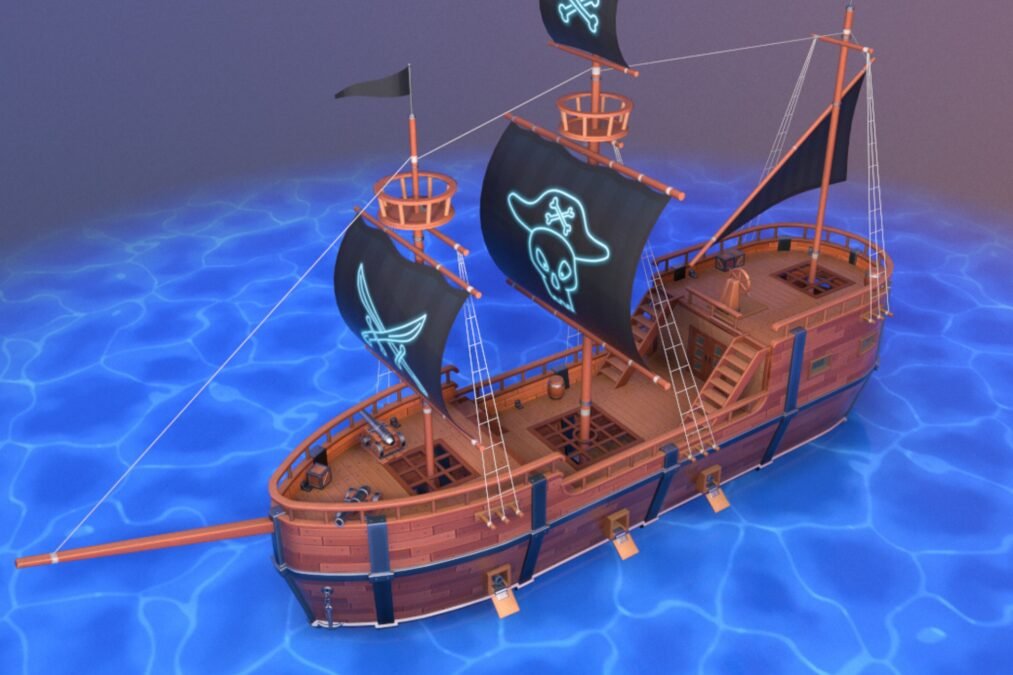
3D Ships The evolution of video games has been nothing short of spectacular, offering new dimensions of realism and immersion with every passing year. One area that has seen immense progress is the representation of ships, particularly in 3D games. 3D ships in gaming offer players the ability to control, explore, and battle using intricately designed vessels that mirror real-world counterparts or soar into the realm of imagination. we will explore the significance of 3D ships in gaming, the technology behind them, and the most popular games featuring them.
The Evolution of 3D Ships in Gaming
The concept of ships in gaming dates back to the early 1980s when 2D side-scrolling and top-down shooters first captured the gaming world’s attention. The graphics were limited by hardware capabilities, and ships were represented as simple pixelated icons. However, as computer graphics advanced, the shift from 2D to 3D revolutionized the way ships were depicted in video games.
By the late 1990s, games like Star Wars: Rogue Squadron (1998) and Battlezone (1998) began to push the boundaries of 3D technology. These games utilized polygon-based 3D graphics to simulate ships in vast, immersive environments, offering players dynamic control over their vehicles.
The Role of 3D Ships in Gaming
In modern video games, 3D ships are not just visual elements but play a crucial role in game mechanics, narratives, and the overall gaming experience. Whether it’s navigating the high seas in naval simulators, flying through the cosmos in space exploration games, or engaging in intense dogfights in aerial combat games, 3D ships are central to gameplay.
- Immersive Gameplay Experience
The primary draw of 3D ships in gaming is the immersion they provide. Players are able to control complex vessels, whether they’re exploring open-world environments or engaging in combat scenarios. The 3D models allow for better spatial awareness, realistic physics, and more engaging visuals. Games like Elite Dangerous or Star Citizen give players the opportunity to pilot highly detailed 3D spaceships that react to user inputs with incredible precision. - Realistic Ship Mechanics
3D ships in games are often designed to reflect the physical mechanics of real-world ships. In space simulators like Kerbal Space Program, players must understand thrust, momentum, and gravity as they build and pilot spacecraft. This adds a layer of challenge and satisfaction that players enjoy as they master complex ship handling mechanics. - Customization and Upgrades
Many games featuring 3D ships allow players to customize their vessels extensively. From paint jobs to weapons and engine upgrades, the level of control over the ship’s appearance and performance provides a unique touch for each player. Titles like No Man’s Sky and Star Wars: Squadrons offer vast ship customization options, enhancing player agency and replayability. - Strategic Depth and Combat
Combat involving 3D ships adds an extra layer of strategy. In naval combat simulators like World of Warships or space combat games like EVE Online, players can choose different types of ships with unique strengths and weaknesses. The design and layout of the ships often impact the gameplay, whether through maneuverability, armor, or firepower. Players must understand the strengths of their chosen vessel and tailor their tactics accordingly. - Exploration and Storytelling
3D ships are often pivotal to the exploration and storytelling aspects of games. In games like Star Trek Online, the player’s ship becomes a hub for missions and story progression. The ship itself may evolve, much like the player’s character, with a unique history and set of abilities.
Popular Games Featuring 3D Ships
The gaming industry is filled with titles that feature 3D ships, ranging from combat-heavy shooters to serene exploration-based experiences. Let’s look at some of the best examples of games that have utilized 3D ships to create compelling gameplay experiences.
1. Star Wars: Squadrons
Star Wars: Squadrons offers players the chance to step into the cockpit of iconic Star Wars ships, such as the X-Wing or TIE Fighter. With highly detailed 3D models, players can engage in intense dogfights in space, employing both offensive and defensive tactics. The game also offers a unique first-person perspective, allowing for a truly immersive experience as players pilot their ships through vast space battles.
2. Elite Dangerous
One of the most expansive space exploration games ever made, Elite Dangerous allows players to explore a massive, procedurally generated universe with their customizable 3D ships. With a focus on realism, players must manage fuel, resources, and ship health as they navigate the galaxy. The attention to detail in the 3D models of the ships, coupled with the complex mechanics, creates an unparalleled sense of immersion.
3. Kerbal Space Program
For those interested in space flight simulation, Kerbal Space Program offers a unique take on 3D ships. Players design and pilot their own spacecraft in a realistic, physics-based environment. The game’s charm comes from its quirky aesthetic and deep physics system, where players are challenged to get their ships into orbit, land on other planets, and explore the cosmos.
4. World of Warships
For fans of naval combat, World of Warships offers highly detailed 3D representations of real-world warships. Players can engage in tactical naval battles on massive bodies of water, carefully positioning their vessels to gain strategic advantage over opponents. The ships, ranging from destroyers to aircraft carriers, each offer distinct playstyles and abilities.
5. No Man’s Sky
No Man’s Sky is a space exploration game that has evolved over the years to become a truly expansive 3D world. Players can explore billions of planets, engage in combat, and upgrade their ships. The game’s 3D ship customization and vast, procedurally generated universe make it a standout in the genre.
The Technology Behind 3D Ships in Gaming
The creation of 3D ships in gaming involves a blend of artistic design and cutting-edge technology. Here are the key aspects that make 3D ships possible in modern games:
- 3D Modeling
The process begins with 3D artists who create detailed models of ships using specialized software like Blender, Maya, or 3ds Max. These models are built using polygons, which are then textured and given realistic surface details. The complexity of these models determines how detailed the ships appear in the game. - Physics Engines
Once the models are designed, the ship’s behavior is programmed into the game’s physics engine. This includes things like speed, weight, and momentum. Games with complex ship mechanics rely on advanced physics engines to simulate realistic flight or movement dynamics. - Lighting and Texturing
Realistic lighting plays a significant role in bringing 3D ships to life. The way light interacts with the ship’s surface – whether reflecting off metal or glowing under the heat of a space engine – adds layers of realism. Textures are used to give the ship’s surface depth and detail, simulating the appearance of different materials like steel, plastic, or space-dust accumulation. - AI and Behavior
In many games, AI-controlled ships will interact with the player’s ship. The behavior of these ships, whether they are enemies, allies, or neutral parties, is programmed using AI techniques that allow the ships to react to the player’s actions in a believable way. Whether it’s enemy ships dodging missiles or allies offering support during combat, AI-controlled 3D ships are an integral part of the experience.
The Future of 3D Ships in Gaming
As technology continues to evolve, so too will the way 3D ships are integrated into games. With advancements in virtual reality (VR) and augmented reality (AR), players may soon have the ability to pilot their ships in fully immersive, first-person environments, further blurring the line between fiction and reality. The future of 3D ships in gaming also lies in the development of even more realistic physics simulations, deeper customization options, and more expansive universes to explore.
3D ships in gaming refer to ships or vessels represented in a three-dimensional space, allowing for a realistic depiction of movement, combat, and exploration. These ships are created using 3D modeling techniques and are designed to enhance the player’s experience through immersive environments, detailed ship designs, and realistic physics simulations.
Many game genres feature 3D ships, including space exploration games (Elite Dangerous, Star Citizen), naval combat simulators (World of Warships), and flight simulators (Microsoft Flight Simulator). These games allow players to control ships in different environments, from outer space to the high seas.
3D ships provide a more immersive and realistic gameplay experience. They allow players to engage in complex mechanics like navigation, combat, and ship customization. The detailed 3D models and realistic physics offer a dynamic way to explore and interact with the virtual world, making the gameplay more engaging and interactive.
Conclusion
3D ships have become an essential element in many video games, offering players dynamic control, realistic simulations, and immersive environments. From space exploration in Elite Dangerous to naval battles in World of Warships, 3D ships provide depth, strategy, and excitement to a wide range of genres. As technology continues to advance, the future of 3D ships in gaming looks promising, with even more realistic simulations and expansive worlds on the horizon. Whether you are navigating the skies, exploring distant planets, or commanding a naval fleet, 3D ships are sure to remain a central feature in the world of gaming.